

UNESCO Tour in India
Embark on a unique cultural odyssey from Goa. From the magnificent ruins of Hampi to little-known coastal forts, discover India where history meets the serenity of the Indian Ocean. Travel through UNESCO sites in India.
From €1,890 per person
15 days to discover UNESCO World Heritage sites / 14 nights
Tour: Goa – Hubbli – Hampi – Badami – Bijapur – Kolhapur – The Konkan region
BOOK YOUR STAYSEE OUR OTHER TOURS
Summary of the itinerary
Spiritual and Architectural Awakening (Days 1 to 7)
- Goa (2 nights): Welcome and relaxation. Enjoy the colonial charm of Old Goa (UNESCO) before diving into the hinterland.
- Hampi (2 nights): In-depth exploration of the city of Vijayanagara. A spectacular site where every stone tells a legend.
- Aihole, Pattadakal & Badami (1 night): Immersion in carved caves and ancient temples, witnesses to the architectural genius of the 6th century.
- Bijapur (1 night): Nicknamed the ‘Palmyra of the Deccan’, discover the Gol Gumbaz, one of the largest domes in the world.
The Blue Gold Route: From South to North (Days 8 to 15)
- Kolhapur (2 nights): Pass through the imperial city of the Marathas, famous for its palace and Mahalakshmi temple.
- Ratnagiri (2 nights): Between Alphonso mango orchards and palaces in exile, a timeless stopover.
- Dapoli (1 night): Nicknamed ‘Mini Mahabaleshwar’ for its cool climate and pristine beaches.
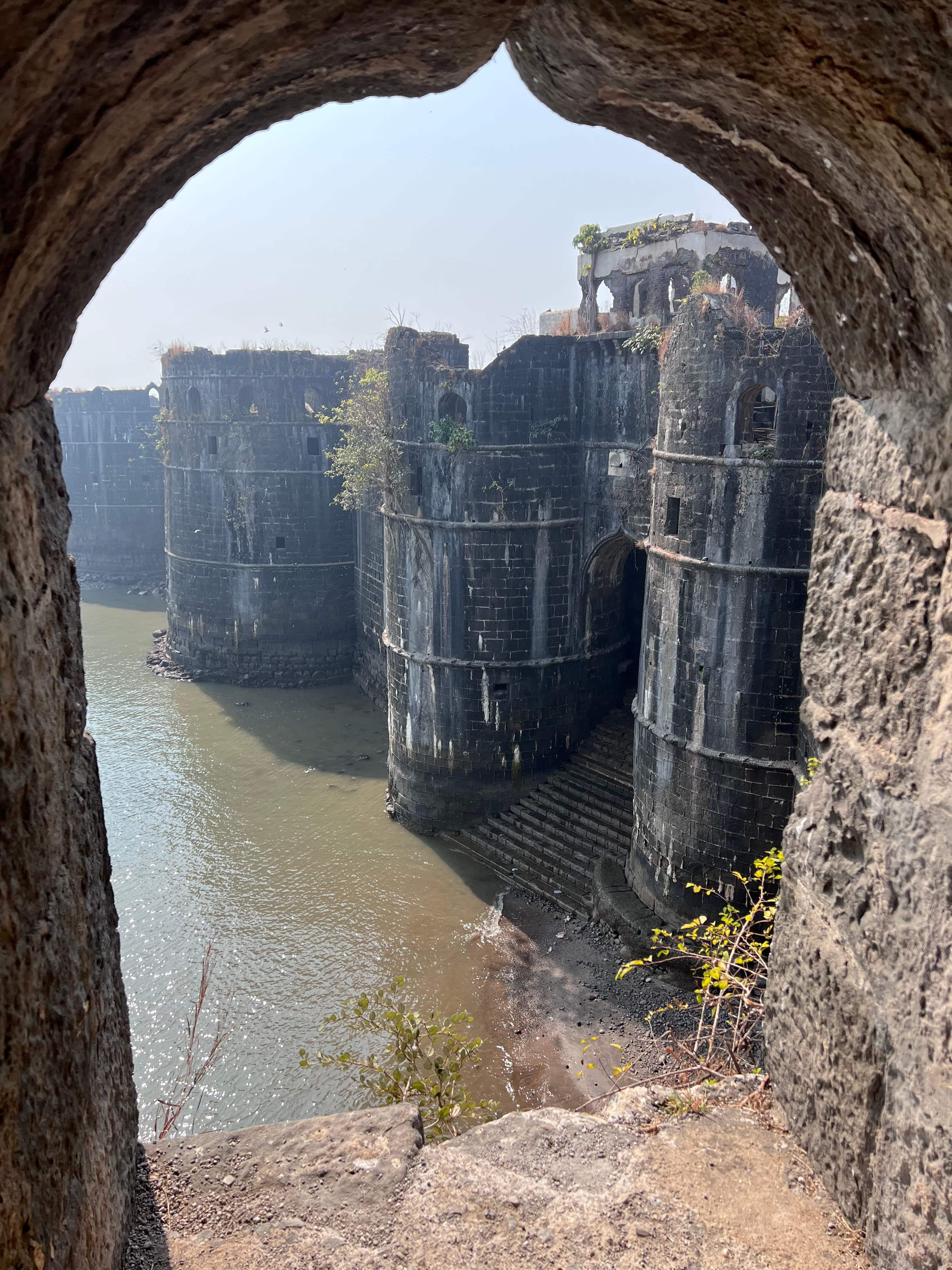
- Murud (2 nights): Explore the impregnable Janjira sea fort, an engineering marvel in the middle of the waves.
- Mumbai (End of tour): Arrive in the city of dreams for your final discoveries or your return flight.
15 days to discover Indian history and nature
An Odyssey between Eternal Stones and Wild Waves
To travel through southern and western India is to accept that time slows down. This journey is an invitation to wonder, a masterful link between the colossal architecture listed as UNESCO World Heritage Sites and the raw, almost secret beauty of the Konkan coast.
The Breath of History
The adventure begins in the gentle climate of Goa, before heading inland to the ochre lands of Karnataka. In Hampi, the spectacle is breathtaking: thousands of granite structures seem to have been placed by giants in the middle of a jungle of palm trees. Here, you can wander among stone chariots and royal temples, bathed in a golden light that seems to belong to another century.
The journey continues to the cradle of Hindu art. In Badami and Pattadakal, the stone is carved with such finesse that it seems alive. These rock-cut shrines, carved directly into the cliff face, bear witness to an artistic genius that has defied the millennia. In Bijapur, the horizon changes, giving way to the majesty of Persian domes, reminding us that India is a mosaic of civilisations. Then, the road veers westward, marking an imperial stopover in Kolhapur: here, the splendour of the Maratha Maharajas is revealed at the New Palace and in the mystical fervour of the Mahalakshmi temple, the true spiritual heart of the region.
The serenity of Konkan
The road continues where the Ghats mountains meet the Arabian Sea. Leaving the imperial cities behind to reach Ratnagiri is to discover a maritime India, authentic and perfumed by mango orchards. Here, the rhythm is dictated by the tide.
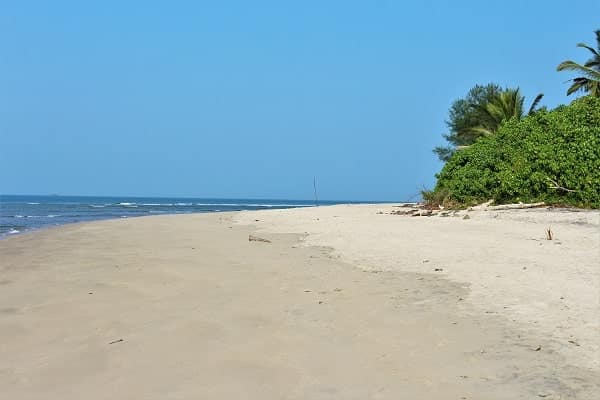
Along this little-known coastal road, impregnable fortresses such as Murud-Janjira rise out of the ocean, stone sentinels that have defied the waves for centuries. Between the colourful fishing ports of Dapoli and the deserted beaches lined with coconut trees, each stop is a breath of fresh air, a contemplative break from the hustle and bustle of city life.
The apotheosis of Mumbai
The journey ends where everything speeds up: Mumbai. The ‘Gateway to India’ welcomes you with its magnetic energy, Victorian buildings and bustling markets. It is here, facing the sea, that this enchanted interlude comes to a close, between the indelible traces of vanished empires and the eternal murmur of the Indian Ocean.
Akvin Tourism’s expertise for this tour:
- A rare balance: The cultural intensity of the UNESCO sites is offset by the gentle way of life on the Konkan coast.
- Attention to detail: Stops chosen for their character, far from the usual tourist routes, for a real immersion in Maharashtra, Karnataka and Goa.
- Smooth logistics: An itinerary designed to minimise fatigue and maximise contemplation, from Goa airport to the lights of Mumbai.
We take particular care in selecting the hotels we offer you. All hotels selected for this tour are at least 3 or 4 stars. In all cases, the room has a private bathroom with Western-style toilets.
Examples of hotels offered:
In Goa: WelcomHeritage Panjim Inn
In Badami: Kusum Resort
In Dapoli: Cocorico Resort
The tour includes breakfast and lunch. Most of the time, breakfast will be served at the hotel.
Lunch can be enjoyed at restaurants we have selected, but also at local residents’ homes.
The food served will be basic vegetarian Indian cuisine. This food is very fragrant and colourful and can sometimes be spicy. In the guide you will receive to help you prepare for your trip, you will learn how to acclimatise to this food.
Drinks are not included.
The price per person for this tour depends on the number of people booked:
- For 1 to 6 people, the price is €2,290.
- For more than 7 people, the price is €1,890 per person (up to a maximum of 10 people).
The tour is guaranteed for a minimum of two people.
For bookings of more than 6 people, please contact us.
This tour includes:
- Accommodation with breakfast
- Lunch every day except the first day (vegetarian menu)
- Transport (taxi, boat, train and bus)
- Entrance fees to monuments
- Various guides throughout the trip
- Essential advice for preparing your trip (PDF download)
- Price guaranteed at the time of booking
- Taxes
Not included in this tour:
- Dinners
- Personal purchases, drinks and tips
- International flights and airport taxes
- Visa fees
- Repatriation insurance
- Anything not mentioned above
Day 1: Landing in Goa – Tropical immersion and first smiles
Your journey begins smoothly upon arrival at Goa Airport. Leave the fatigue of the flight behind: our team will welcome you at the terminal for a private and comfortable transfer to your hotel.
The afternoon is entirely free for you to settle in at your own pace. Enjoy the tropical atmosphere of Goa, relax by the water or stroll through the peaceful streets with their Indo-Portuguese influences.
At the end of the day, as the heat subsides, we invite you to join us for a welcome drink. This friendly and informal moment is the perfect opportunity to get to know each other, present the highlights of your tour in detail and answer any questions you may have before diving into the history of India.
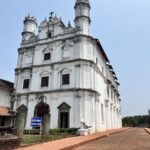
Day 2: Indo-Portuguese heritage, from Panjim to the splendours of Old Goa (UNESCO)
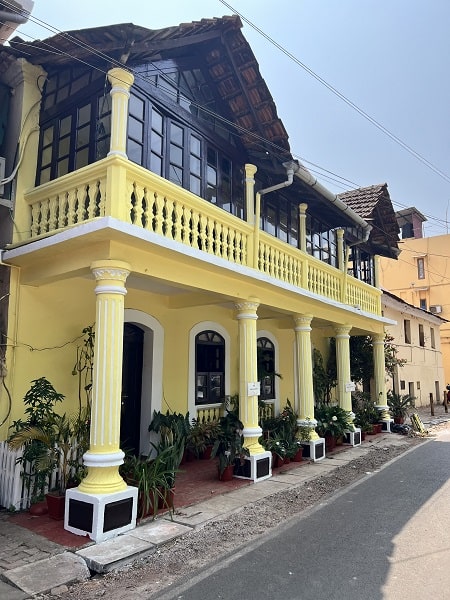
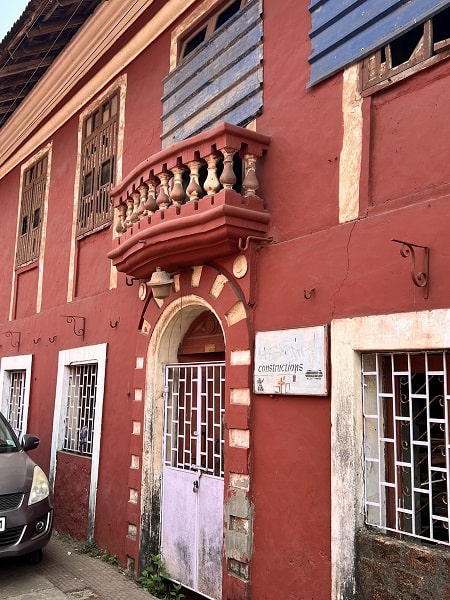
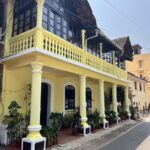
After waking up to the sunshine of the west coast, delve into the region’s colonial past. The morning begins with a stroll through the picturesque streets of Fontainhas, Panjim’s famous Latin Quarter. You’ll be charmed by its wrought-iron balconies, azulejo street signs and ochre, blue and yellow houses, instantly reminiscent of Mediterranean architecture.
A few steps away, the imposing Church of Our Lady of the Immaculate Conception dominates the city with its dazzling whiteness. Its majestic zigzag staircases offer a perfect introduction to the religious fervour that has shaped the history of this territory.
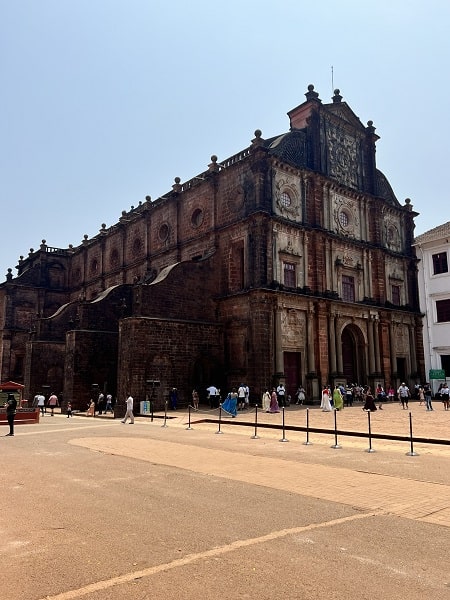
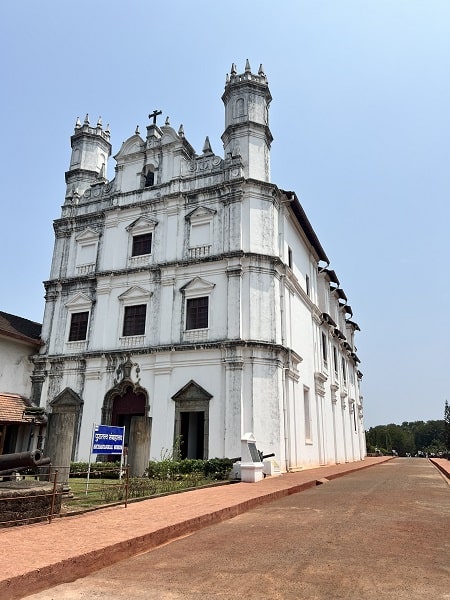
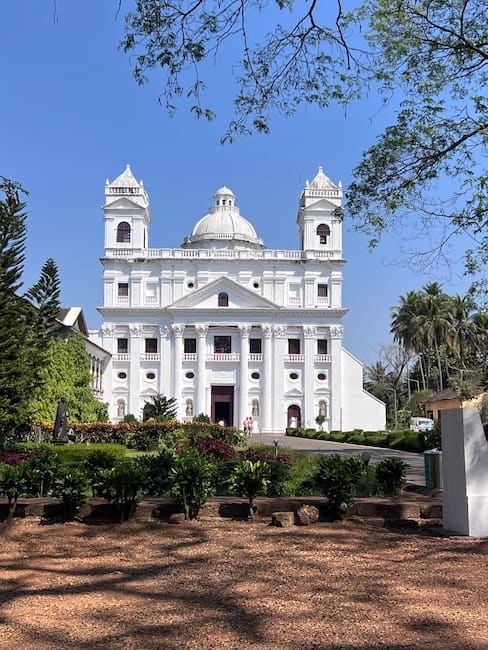
In the afternoon, take the short drive to the former capital, Old Goa. This is where your exploration of UNESCO World Heritage sites truly begins. Once known as the ‘Rome of the East’, this ancient metropolis is home to a fascinating collection of majestic churches and monasteries. As you walk through these colossal buildings, such as the famous Basilica of Bom Jesus or St. Catherine’s Cathedral, which now stand amid lush vegetation, you can sense the grandeur of the former Portuguese empire in India.
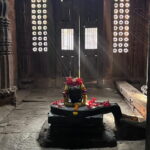
Day 3: From the ocean to sacred forests, immerse yourself in the Western Ghats
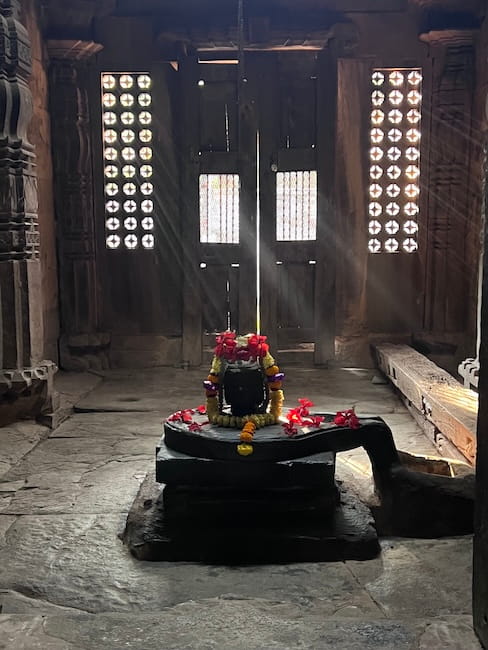
Leave behind the coastal breeze of Goa and delve into the emerald lushness of the Western Ghats. Today’s route is a true transition, both geographically and temporally. In the heart of the Bhagwan Mahaveer Wildlife Sanctuary, hidden by thick jungle, lies the Mahadeva Temple at Tambdi Surla. Carved from black basalt in the 12th century, it is the only intact remnant of Kadamba dynasty architecture in the region. Its isolation gives it a mystical and soothing aura, far from the hustle and bustle of the modern world.
The journey continues, winding through the rolling landscapes of northern Karnataka to your evening stop: Hubli (Hubballi). Here you will encounter Chalukya art as you discover the Chandramouleshwara Temple. Nearly 900 years old and located near the peaceful Unkal Lake, this sanctuary dedicated to Shiva fascinates with its finely carved pillars and perfectly geometric doors. It is a masterful introduction to the precision of Indian stonemasons in medieval times.
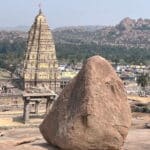
Day 4: Drive to Hampi and immerse yourself in the excesses of the Vijayanagara Empire (UNESCO)
After breakfast, you leave the hustle and bustle of Hubli behind and head east. As you travel, the landscape changes dramatically: gigantic blocks of ochre and golden granite rise up amid lush palm groves and emerald rice fields. You have arrived in Hampi, the ancient capital of the powerful Hindu empire of Vijayanagara. This UNESCO World Heritage Site exudes an unreal, almost lunar atmosphere.
Your exploration of the Hampi Monument Complex begins in the afternoon with an immersion in the royal area. To fully understand the history and scale of this forgotten metropolis, a visit to the archaeological museum is a must. Its collections of intricate sculptures and period artefacts bring the stones you are about to walk among back to life.
You will then discover the Lotus Mahal, one of the jewels of the palace complex. This pavilion of rare elegance, once reserved for the women of the court, is a fascinating example of syncretic architecture, gracefully blending Indo-Islamic arches with Dravidian-inspired roofs. A few steps away, the grandeur of the empire is revealed in front of the Elephant Stables. This long, symmetrical building topped with majestic domes bears witness to the unprecedented splendour of an era when royal pachyderms, symbols of power, were housed in veritable palaces.
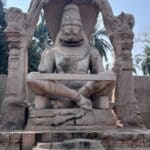
Day 5: The sacred heart of Hampi, stone colossi at dusk on the Tungabhadra
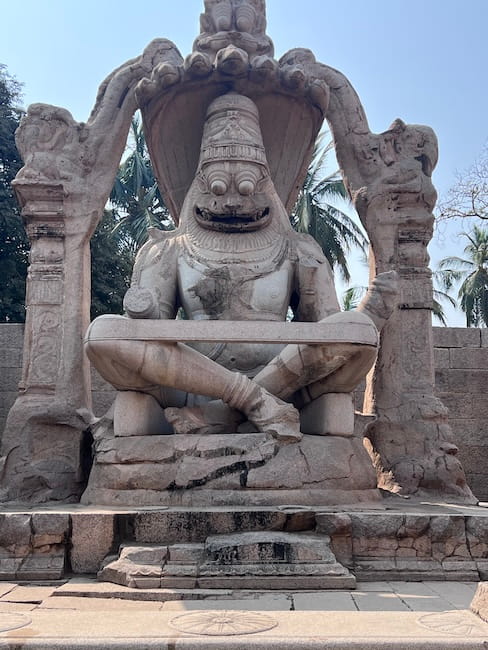
Today, you will enter the spiritual epicentre of the ancient empire. The day begins with an impressive encounter with the monolithic masterpieces for which the site is famous. First, you will discover Shri Lakshmi Narasimha, the largest statue in Hampi. Carved from a single block of granite, this fierce representation of the avatar of Vishnu, nearly seven metres high, commands respect with its unshakeable presence. A few steps away, the majestic Saasivekaalu Ganesha, another stone colossus, sits peacefully on the slopes of Hemakuta Hill.
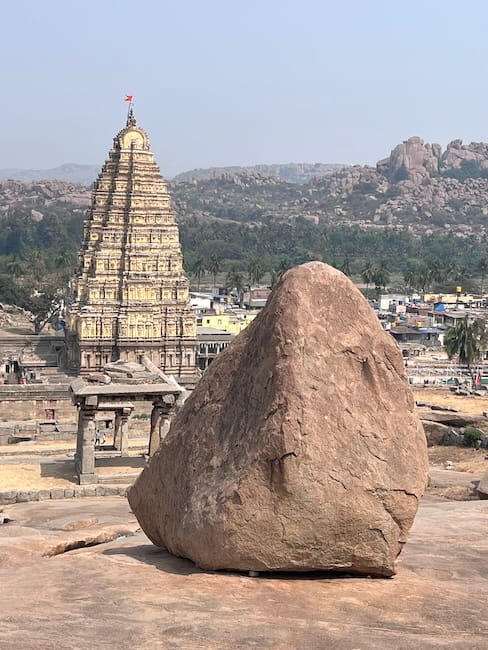
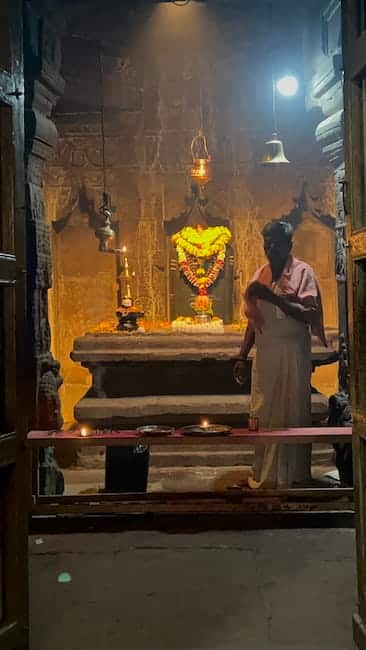
Your journey through the living history of the city then takes you to the Shri Uddana Veerabhadra Swamy Temple, an energy-filled sanctuary where local fervour is still palpable. But the real jewel of the morning is the Virupaksha Temple. Dedicated to Shiva and topped by its dizzying gopuram (gate tower), it is the beating heart of Hampi. Unlike the surrounding ruins, this temple has never stopped welcoming pilgrims since the 7th century. Walking around it, you can feel the timeless soul of South India, to the rhythm of ancestral songs and rituals.
At the end of the day, the pace slows down. You cross the Tungabhadra River to reach the other bank, affectionately nicknamed Hippie Island. The atmosphere here is bohemian and deeply soothing. From the panoramic viewpoint (Sunset Point), settle in comfortably to watch nature’s spectacle: the setting sun literally sets the chaotic landscape of round rocks and rice fields ablaze, painting the sky with shades of purple and gold. A magical conclusion to your stay in the city of kings.
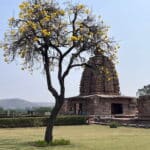
Day 6: The Golden Triangle of the Chalukyas: Aihole, Pattadakal (UNESCO) and the Badami Caves
This morning, you leave the granite landscapes of Hampi behind to travel even further back in time. Your route takes you to the peaceful Malaprabha River valley, the true epicentre of medieval Indian art.
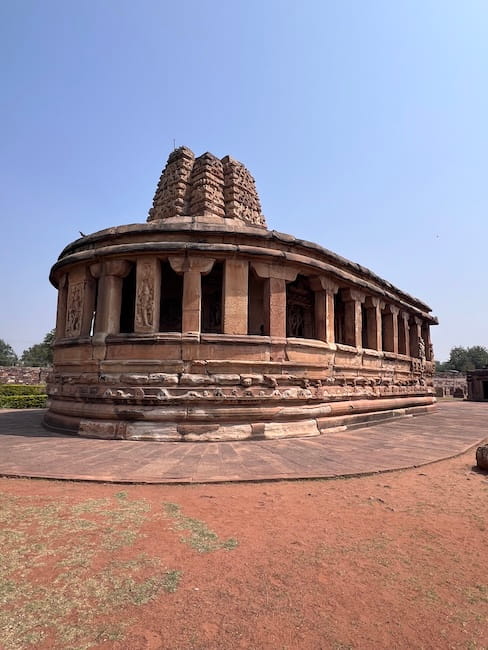
Your first stop is Aihole, often referred to as the ‘laboratory of Hindu architecture’. It was here, between the 5th and 8th centuries, that the craftsmen of the Chalukya dynasty experimented with the first stone temple structures. As you stroll among the shrines scattered throughout the village, including the famous and unusual Durga Temple with its apse shape, you will literally witness the birth of a major architectural style.
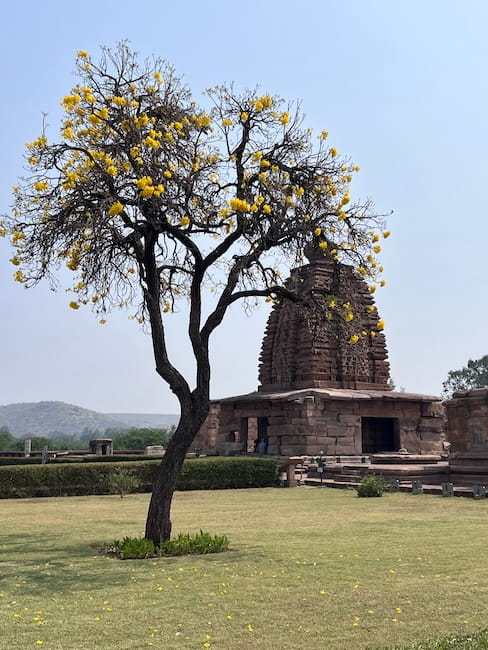
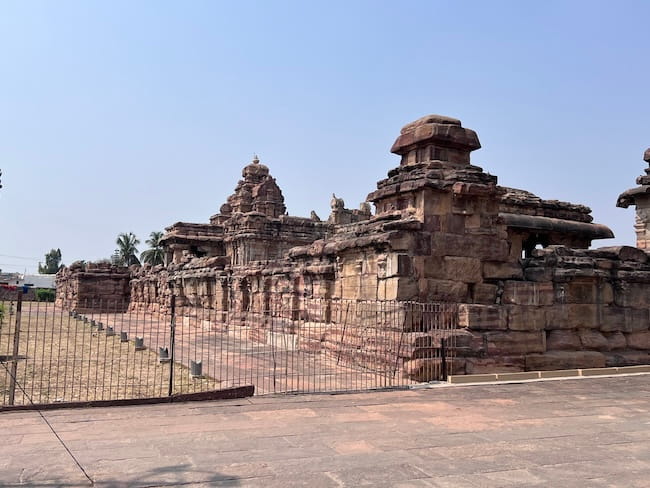
A few kilometres away, perfection is achieved at Pattadakal. This majestic site, listed as a UNESCO World Heritage Site, represents the pinnacle of Chalukya art. It offers a striking spectacle where the architectural styles of northern (Nagara) and southern (Dravidian) India come together and blend in perfect harmony. The Virupaksha Temple, covered with sculptures of incredible finesse recounting the great Hindu epics, is a true masterpiece of ‘stone lace’.
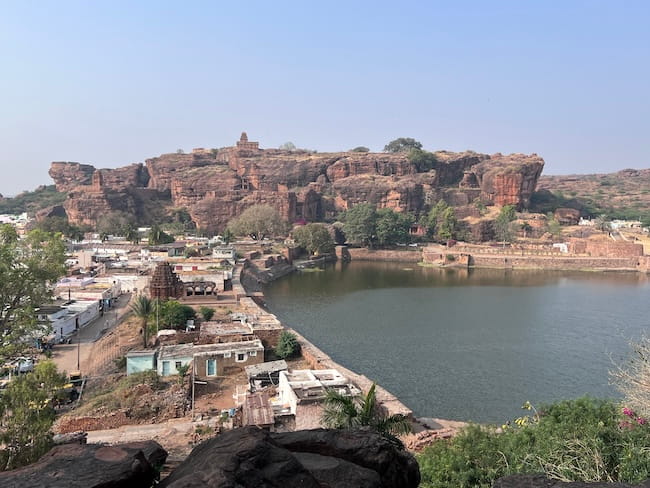
At the end of the afternoon, the day reaches its visual climax in Badami. The ancient royal capital nestles in a spectacular ravine of red sandstone cliffs, overlooking the green waters of Lake Agastya. Here you will explore the impressive rock-cut temples carved into the rock. Inside these monumental caves, the dim light reveals carved pillars and frescoes dedicated to Shiva and Vishnu. The late afternoon light setting the purple rock ablaze will make this visit absolutely unforgettable.
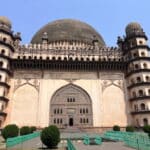
Day 7: To the north of the Deccan, dazzling Bijapur and the colossal Gol Gumbaz
After exploring the roots of Hindu architecture, your journey takes on a whole new dimension this morning. You leave the purple cliffs of Badami behind to cross the vast expanses of the Deccan Plateau. At the end of this road lies the silhouette of Bijapur (now Vijayapura), the ancient and powerful capital of the Adil Shahi dynasty.
The cultural and visual contrast is striking. Rightly nicknamed the ‘Palmyra of the Deccan’ because of the profusion and majesty of its historical remains emerging from the plain, the city is a veritable open-air museum celebrating the golden age of Indo-Islamic architecture.
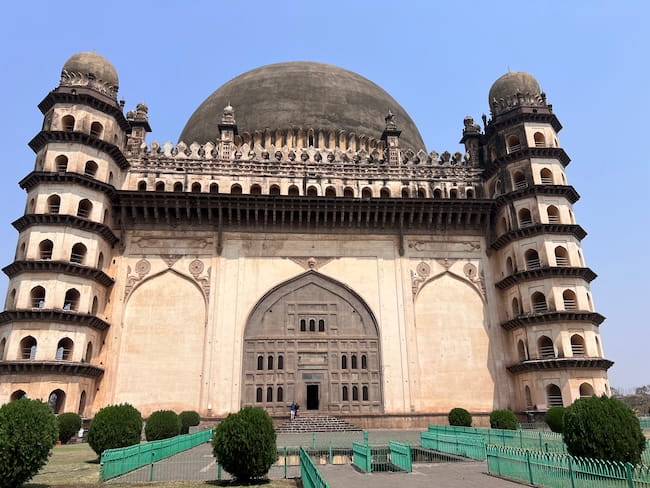
The afternoon holds a real architectural shock in store for you with the discovery of the monumental Gol Gumbaz. This titanic mausoleum houses the tombs of the royal family and is crowned by a dome of staggering proportions – often considered the second largest classical dome in the world after that of St. Peter’s Basilica in Rome. Be sure to climb up to its famous Whispering Gallery, an engineering feat where the slightest whisper echoes and travels across the immense space with fascinating clarity.
Before the day ends, you can also admire the absolute elegance of the Ibrahim Rauza, a funerary complex of such finesse that its minarets and finely carved facades are rumoured to have inspired the builders of the Taj Mahal.
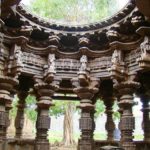
Day 8: Entering Maharashtra, the jewel of Kopeshwar and living traditions in Kolhapur
This morning, you leave the plains of Karnataka and cross into Maharashtra. Before reaching your evening destination, a stop suspended in time awaits you on the peaceful banks of the River Krishna: the extraordinary Kopeshwar Temple in Khidrapur.
Built in the 12th century and dedicated to Shiva, this sanctuary is an absolute masterpiece, yet jealously guarded from the crowds. Its most fascinating feature is its Swargamandap, a circular pavilion with a roof open to the sky, offering pilgrims a heavenly view (‘Swarga’ meaning paradise). The base of the temple, supported by 92 elephants carved with astonishing precision, bears witness to the heyday of craftsmanship at the time.
You then continue on your way to the ancient princely city of Kolhapur. While the city is famous for its royal history, it is also the beating heart of an ancient and fascinating tradition: Kushti, traditional Indian wrestling.
To capture the true spirit of Maharashtra, we open the doors to a Talim (or Akhara), a traditional training gym. Far from the tourist folklore, you will witness the training of the Pahalwans (wrestlers) in an atmosphere imbued with spirituality and respect. Watching them compete in the red ochre earth, according to ancient rituals, is an immersive, raw and unforgettable experience that adds a whole new dimension to your trip.
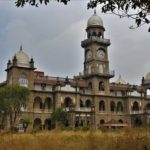
Day 9: Royal splendour and spiritual fervour in the heart of the Marathi capital
After a peaceful wake-up call, this day is entirely devoted to discovering the two faces of Kolhapur: its imperial heritage and its deeply spiritual soul.
Your morning begins with an exploration of the impressive New Palace. The historic residence of the Maharajas of the Bhonsle dynasty, this majestic building is a masterpiece of Indo-Saracenic architecture. Built in finely carved black basalt, it stands proudly in the middle of vast green gardens. The ground floor, converted into a museum (the Chhatrapati Shahu Museum), offers a fascinating journey into the private lives of the Maratha rulers: ceremonial weapons, carved thrones, period photographs and precious crafts bear witness to the splendour of a bygone era.
In the afternoon, enjoy a change of atmosphere with an immersion in the heart of the Mahalakshmi Temple (also known as Ambabai). This thousand-year-old sanctuary, whose origins date back to the Chalukya era, is one of the most revered pilgrimage sites in Maharashtra and one of India’s 18 Shakti Peethas. As soon as you step through its carved doors, you are enveloped by an intoxicating fervour: the scent of incense, the tinkling of bells, devotional chants and the shimmering saris of pilgrims create a vivid and moving tableau.
At the end of the day, enjoy the hustle and bustle of the surrounding bazaars. This is the perfect opportunity to admire the local crafts, famous throughout India, before savouring your last evening in the countryside.
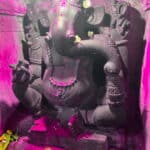
Day 10: From the sacred mountains of Jyotiba to the sea spray of the Arabian Sea in Ratnagiri
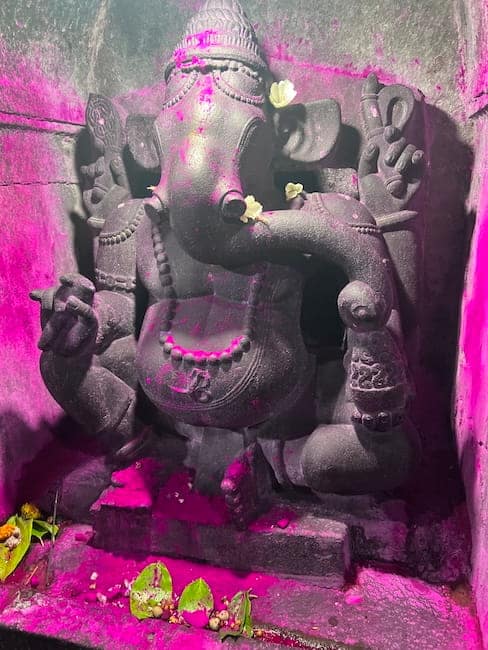
This morning, you leave Kolhapur to begin your descent to the mythical Konkan coast. But before reaching the ocean, one last spiritual stop at high altitude awaits you: the spectacular Jyotiba Temple. Perched at an altitude of nearly 1,000 metres in the hills of Wadi Ratnagiri, this sanctuary dedicated to an incarnation of Shiva and the sun is visually striking. Everything is covered in Gulal, a bright pink powder thrown by pilgrims as a sign of devotion. The energy that emanates from it and the panoramic view of the surrounding valleys are simply magical.
You then begin your descent of the majestic Western Ghats. The road winds through tropical jungle landscapes before giving way to the salty breeze of the Arabian Sea. Welcome to Ratnagiri, a famous fishing port on the west coast and home to the famous Alphonso mangoes.
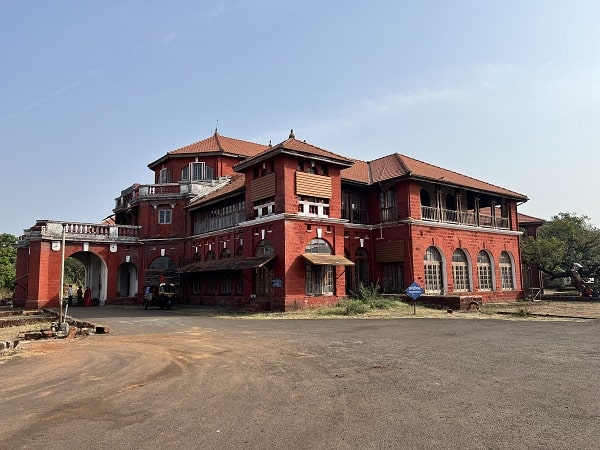
The afternoon takes an unexpected historical turn with a visit to Thibaw Palace. This magnificent red-brick building with sloping roofs was built by the British in 1910-1911 to house King Thibaw, the last ruler of Burma (Myanmar) exiled to India. Walking through its silent rooms is like reliving a fascinating page in Asian colonial history.
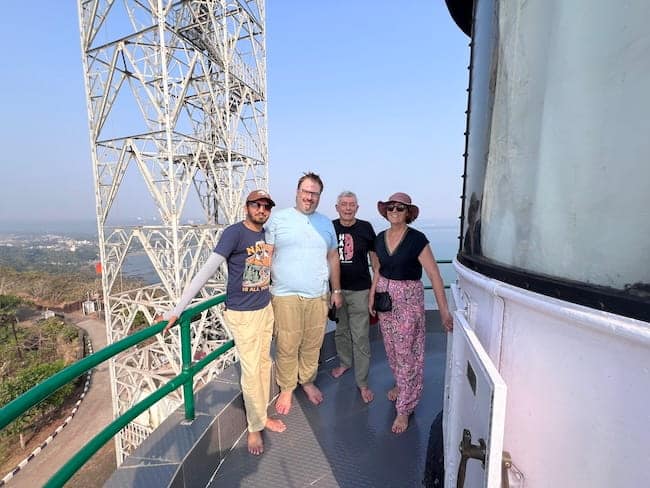
To end this day of transition on a high note, head to Ratnagiri Lighthouse. Built on a rocky promontory, it has been watching over the waves for decades. From its summit or its surroundings, the 360-degree panoramic view of the sparkling Arabian Sea and the rugged Konkan coastline offers an unforgettable sunset, accompanied by the sound of waves crashing against the cliffs.

Day 11: The sacred beaches of Ganpatipule and the ancient mysteries of the Konkan petroglyphs
For this second day in the Ratnagiri region, prepare yourself for a journey that spans the spectrum from gentle seaside pleasures to the most ancient mysteries of humanity.
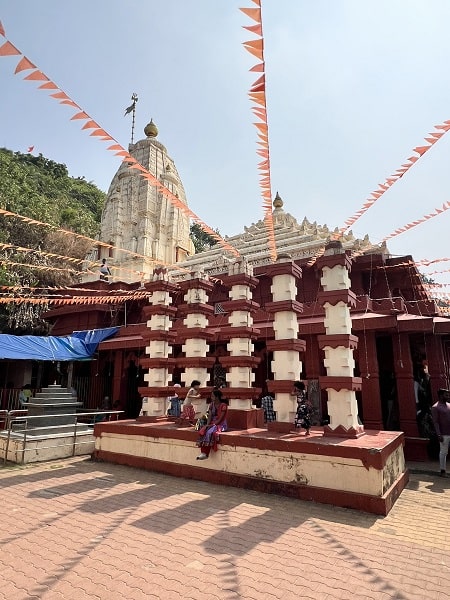
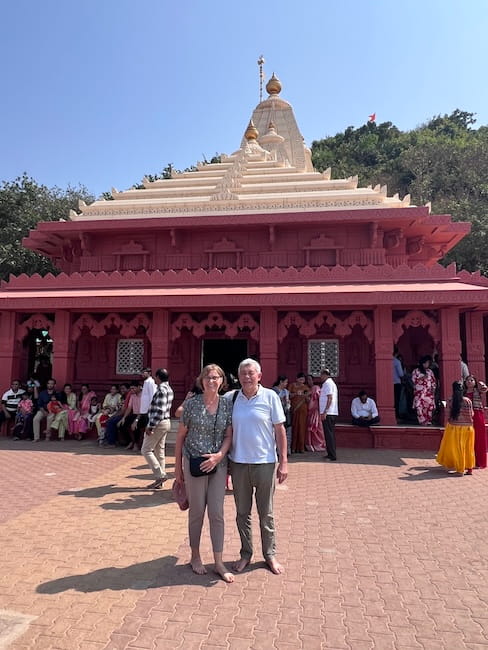
The morning takes you along the magnificent coastal road towards Ganpatipule. This picturesque little village is famous for its long sandy beach lined with casuarina trees and crystal-clear waters, but above all for its 400-year-old sanctuary. The Swayambhu Ganpati Temple, dedicated to the elephant-headed god Ganesh, has the unique distinction of being built right on the beach. The idol, said to be ‘self-manifested’ (Swayambhu) in the rock, attracts pilgrims from all over the state. The atmosphere is serene: Hindu prayers mingle with the gentle surf of the Arabian Sea, offering a moment of absolute peace.
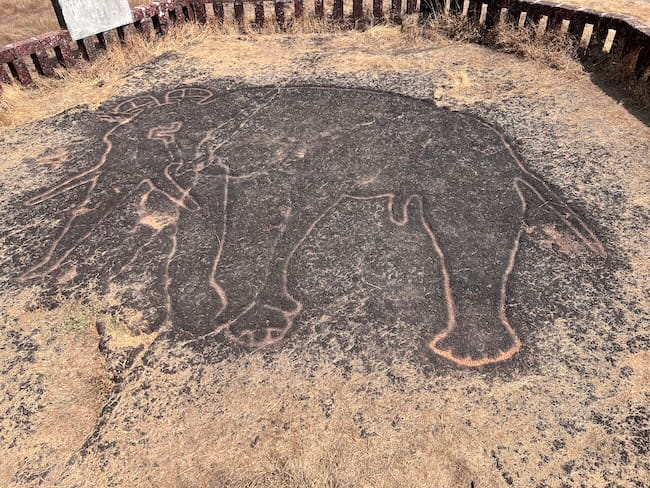
In the afternoon, you leave the white sand for the red laterite plateaus to discover an archaeological treasure still unknown to the general public: the Konkan petroglyphs. Recently added to UNESCO’s World Heritage Tentative List, these spectacular geoglyphs carved into the rocky ground date back to the Mesolithic period (more than 10,000 years BCE).
As you explore these open-air sites with your guide, you will discover monumental engravings depicting animals (elephants, tigers, fish), human figures and complex geometric patterns. This enigmatic testimony to the region’s earliest human civilisations adds a mystical and off-the-beaten-track dimension to your exploration of Indian heritage.
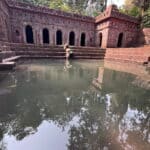
Day 12: En route to Dapoli, step wells and forgotten treasures of the Shilahara dynasty
This morning, you continue your journey north along the spectacular Konkan coast. Before reaching the refreshing heights of Dapoli, this stage immerses you in the fascinating history of the local maritime kingdoms, far from the traditional tourist circuits.
Your journey through time begins with a visit to the ancient Shri Karneshwar Temple. Built in the 11th century by the builders of the Shilahara dynasty, this architectural gem of black stone, nestled in a forest setting, is a masterpiece of medieval Maharashtrian art. Dedicated to Shiva, the sanctuary fascinates with its intricate carved ceilings, rich mythological bas-reliefs and perfect pillars, bearing witness to a regional artistic golden age often overshadowed by the great empires.
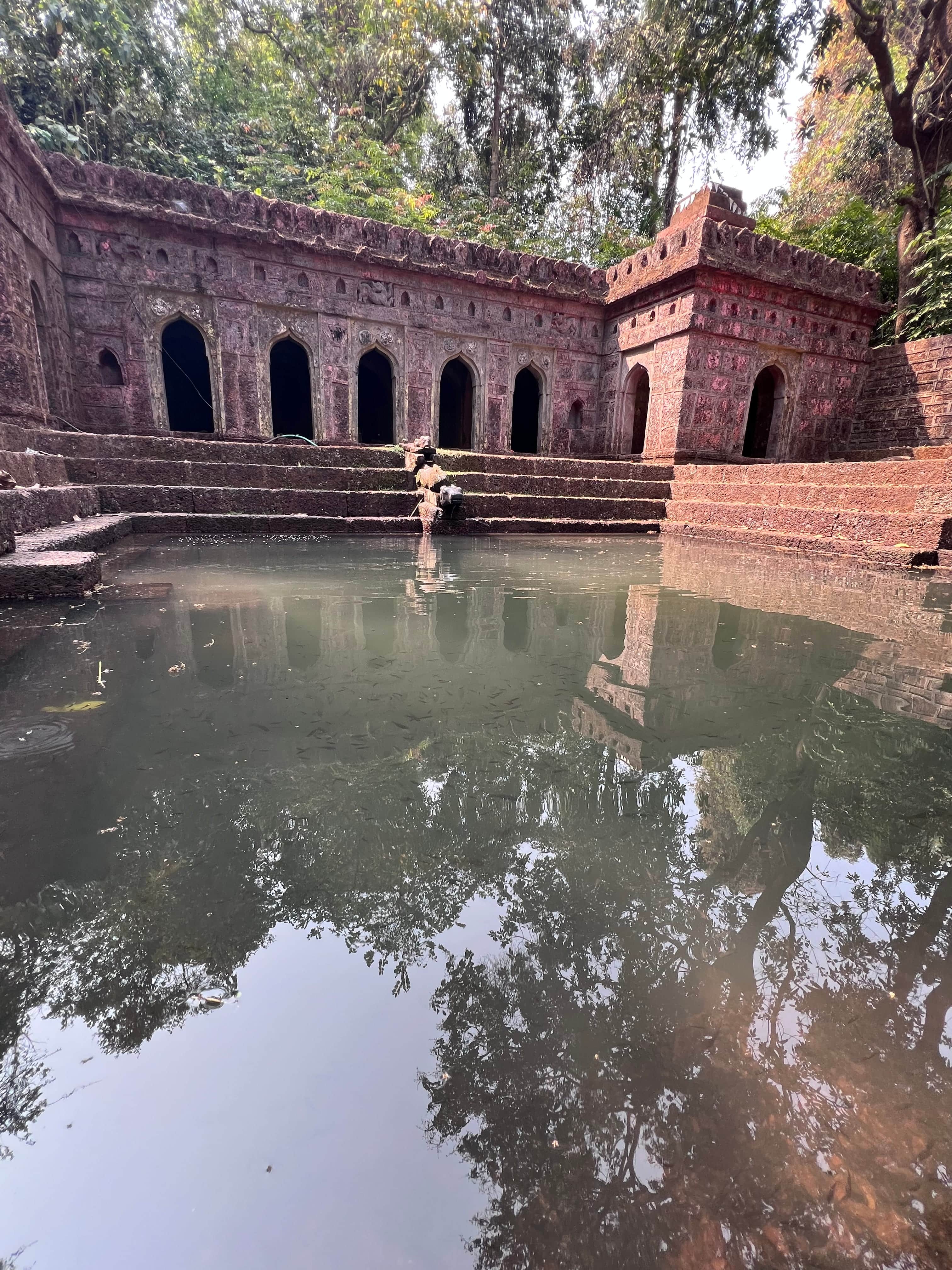
The magic of ancient architecture also comes into play when visiting the Sapteshwar Temple, famous for its splendid stepwell. As water management has always been vital in India, these stepped pools are not mere reservoirs, but true monuments to human ingenuity and devotion. Descending the geometric and symmetrical steps of this sacred pool, surrounded by birdsong and the shade of tall trees, offers a rare moment of contemplation and striking photographic opportunities.
At the end of the day, the road climbs gently to Dapoli. Affectionately known as the ‘Mini Mahabaleshwar’ of Konkan because of its mild climate throughout the year, this green village is the perfect retreat. You will spend a relaxing evening here, lulled by the sea breeze and the subtle scent of the surrounding spice plantations.
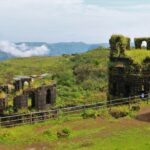
Day 13: The epic story of the Maratha Empire at the summit of Raigad Fort (UNESCO)
Today, you temporarily leave sea level behind for a spectacular climb into the Sahyadri Mountains. Your destination is one of the most powerful, revered and symbolic historical sites in all of Maharashtra: the majestic Raigad Fort.
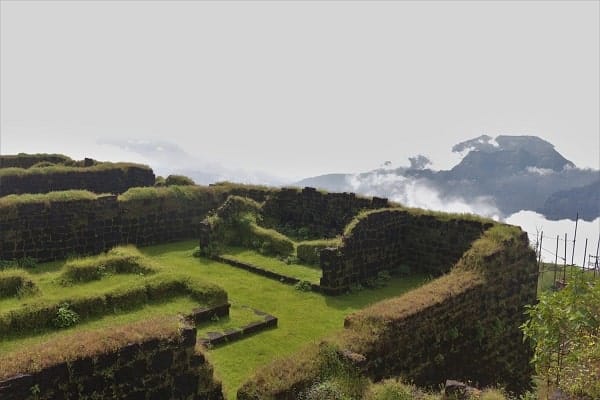
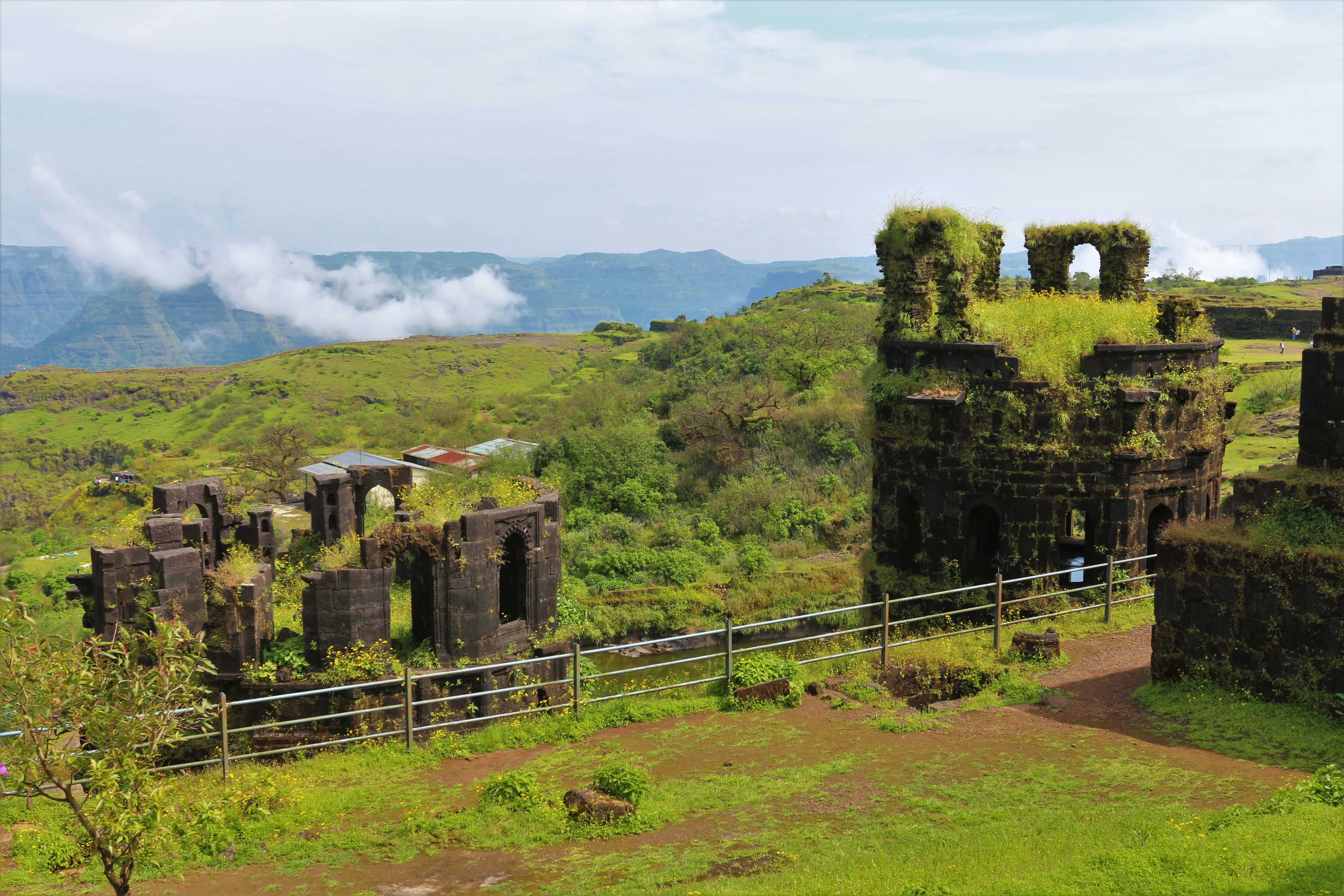
Perched at an altitude of over 800 metres, this mountain fortress was chosen as the impregnable capital of the Maratha Empire by the legendary warrior king Chhatrapati Shivaji Maharaj in the 17th century. To reach the summit in comfort, you will take the ropeway. The ascent offers breathtaking panoramic views of the lush valleys and sharp ridges of the Western Ghats, immediately immersing you in the immensity of the landscape.
Once you pass through the colossal gates of Maha Darwaja, you can explore the grandiose remains of this royal city suspended in the clouds. From the throne court (the Darbar) where the king was crowned, to the ancient palaces and the sanctuary housing the tomb of the great ruler, each ruin echoes with tales of Indian chivalry. Standing on the edge of the Takmak Tok cliffs, facing the sheer drop of the valley, gives you a feeling of indescribable grandeur.
At the end of the afternoon, you descend from these peaks steeped in history to rediscover the gentle way of life on the Konkan coast. You take the road to the charming village of Murud, where the breeze from the Arabian Sea and the swaying coconut palms welcome you for a final peaceful evening before returning to the hustle and bustle of the city.
Noted! A day dedicated to the incredible heritage of the Siddhis on the coast is a brilliant editorial choice.
From an SEO perspective, we will be able to position ourselves on fascinating expressions that are highly sought after by lovers of unusual heritage: undefeated sea fort, Murud-Janjira fortress, Indo-Islamic architecture, Siddhi navigators, Khokari tombs and Konkan coast.
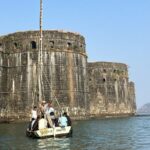
Day 14: The sentinel of the seas at Murud-Janjira and the secret elegance of the Khokari tombs
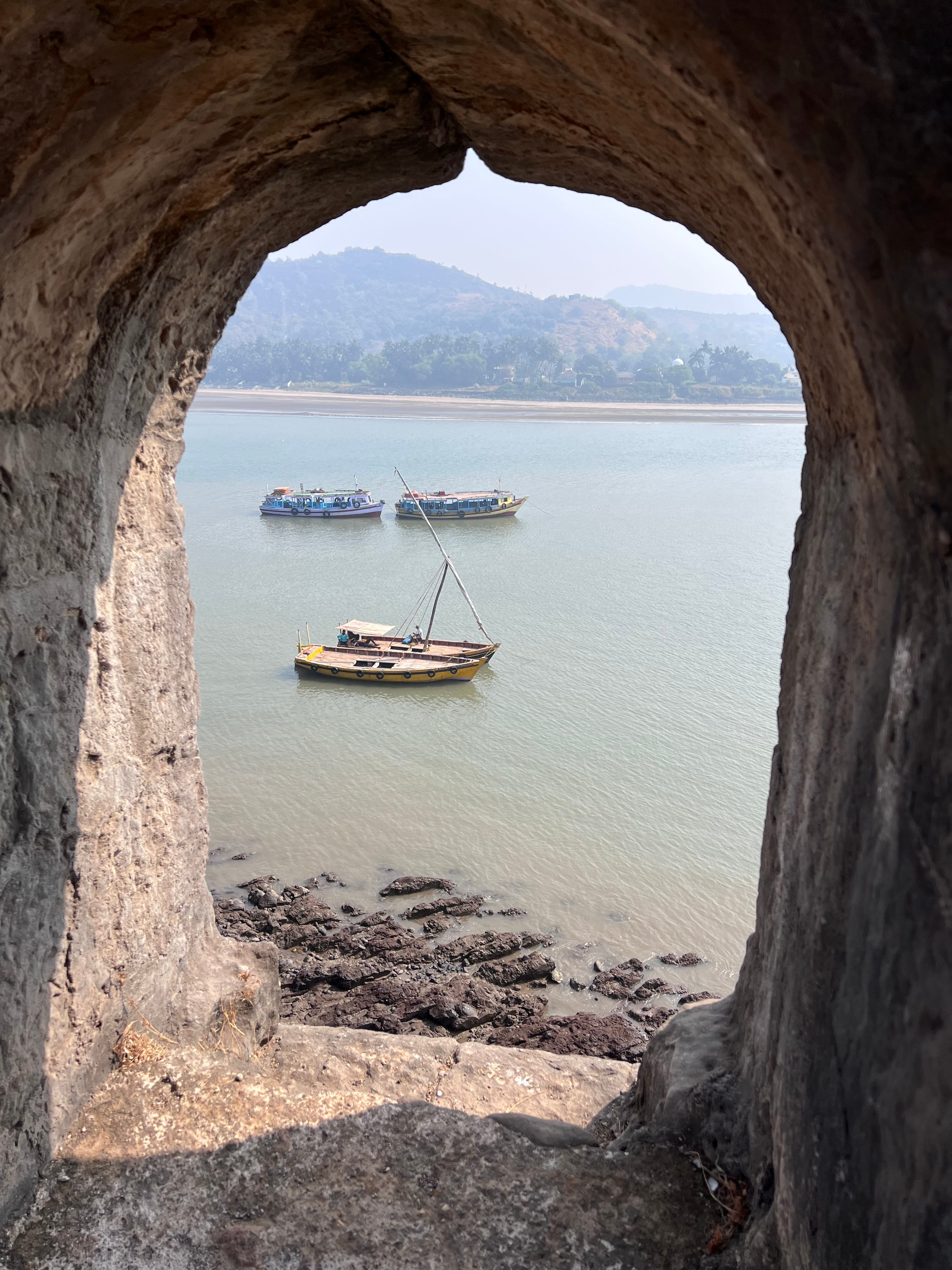
This morning, prepare for an epic adventure on the waters of the Arabian Sea. The goal of the day is to reach one of the most stunning architectural wonders of the Indian west coast: the impregnable Fort of Murud-Janjira.
Rising majestically from the waves, this massive island fortress is a true feat of military engineering. It is accessed aboard small traditional sailing boats (dhows), gliding across the water with the wind, which gives this approach an unforgettable air of mystery. Built by the Siddhis – formidable navigators of Abyssinian (East African) origin – this bastion holds an absolute record: it has withstood repeated attacks by the Marathas, Portuguese and British, remaining undefeated throughout its history. As you pass through its hidden gate, almost invisible from the sea, you will discover titanic ramparts, rusty cannons defying the horizon, and two huge freshwater pools miraculously dug in the middle of the salty ocean.
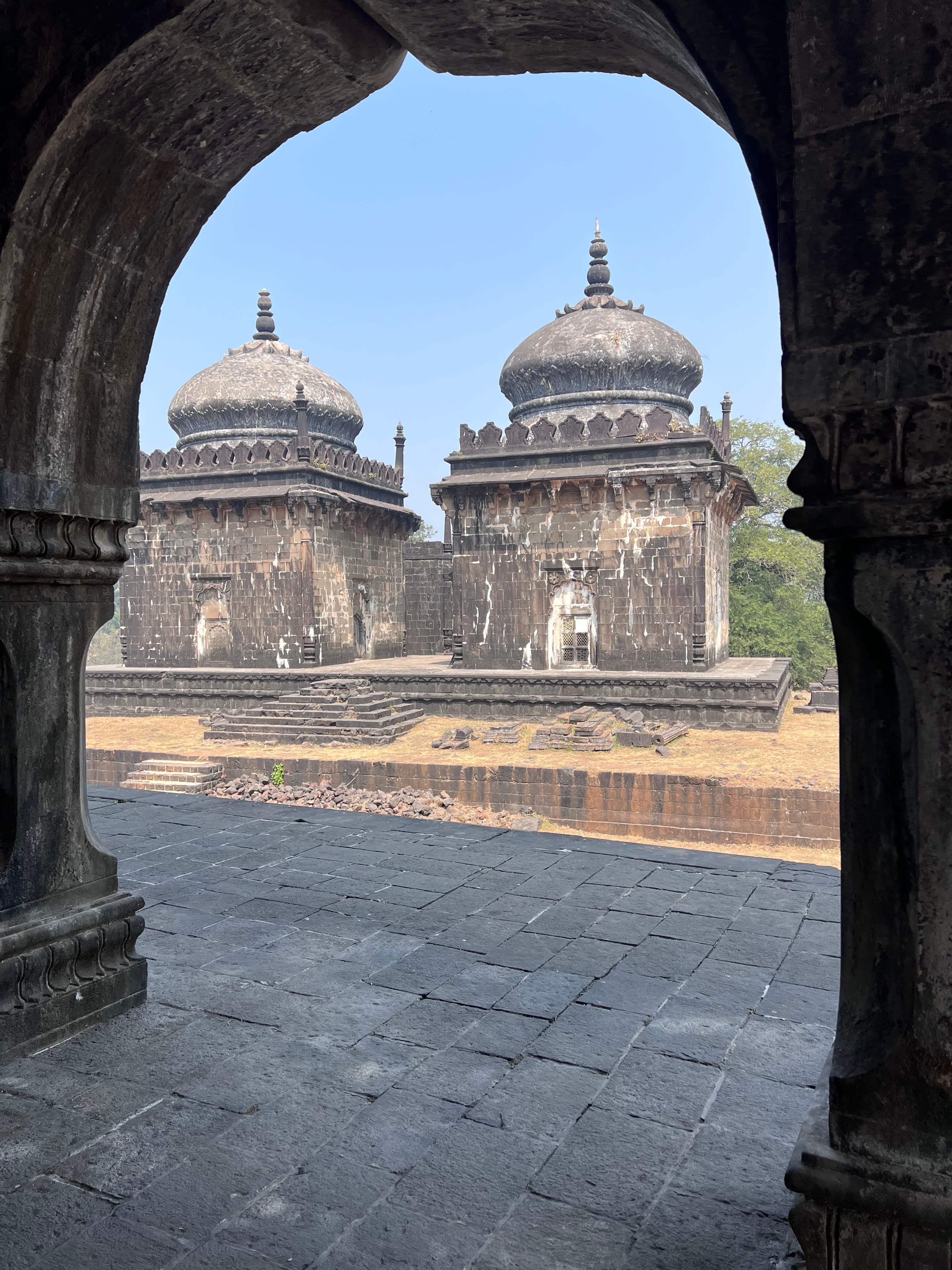
Back on dry land, your exploration of this little-known heritage continues a few kilometres away at the Khokari Tombs (Khokari Gumbaz). Nestled in a bucolic and peaceful setting, these three monumental mausoleums, over 500 years old, house the tombs of the former rulers (Nawabs) of Janjira.
Their impressive Indo-Islamic architecture, characterised by vast stone domes and delicate ornamentation, contrasts beautifully with the lushness of the surrounding coconut trees. Strolling in the silence of these buildings forgotten by time is a deeply poetic experience, marking a perfect conclusion to your immersion in the hidden treasures of Maharashtra.

Day 15: From the tranquillity of Konkan to Mumbai, the end of your odyssey
It is time to leave the tropical warmth of Murud behind. After one last morning lulled by the murmur of the Arabian Sea, you will head north to the bustling metropolis of Mumbai. This journey marks a gentle and contemplative transition between the unspoilt serenity of the Konkan coast and the vibrant energy of the capital of Maharashtra.
Upon arrival in Mumbai, there are no mandatory visits to ensure you enjoy a peaceful end to your trip. Our team will take you directly to Chhatrapati Shivaji Maharaj International Airport for your return flight, or to the hotel of your choice if you have decided to extend your stay on your own in the ‘city of dreams’.
It is here, on the shores of the Arabian Sea, that our services come to an end. You will leave with a peaceful mind and memories filled with unforgettable images, from the golden temples of Hampi to the secret citadels of Konkan.
Why choose this tour?
This is not just a trip, it is an immersion in time. This exclusive itinerary connects India’s UNESCO World Heritage sites with the raw beauty of the Konkan coast. Ideal for architecture enthusiasts and travellers seeking authenticity, far from the beaten track.
Highlights of the trip:
- Hampi: The surreal spectacle of a forgotten empire in a landscape of granite boulders.
- Chalukya Art: The sites of Badami, Aihole and Pattadakal, cradles of Hindu architecture.
- The Konkan Coast: A journey up to Mumbai punctuated by deserted beaches and maritime fortresses.
- Unique temples with unique spirituality: The temples of Jotiba and Kopeshwar are unique in India.
Off the beaten track
Even though Goa is beginning to suffer from mass tourism, we offer a tour that gets off the beaten track. You will discover unique places known to few people. Put on your hat, you will be an explorer during this tour.
Varied visits
You will visit caves, forts and natural sites. You will discover many different things.
Contact with the local population
All our tours are designed to bring you into contact with the local population.
Cancellation policy
Upon booking, you pay 10% of the total cost of the tour. The balance is due 60 days before departure.
- In the event of border closures:
- Up to one week before departure, the trip will be fully refunded.
- From 7 days before departure, the trip will be fully refunded minus administrative fees (approximately £70).
- In the event of cancellation on your part:
- 30 days before departure: 100% of the price refunded except for the 10% deposit.
- Between 29 and 15 days before departure: 50% of the price refunded.
- No refund will be made for cancellations 14 days before departure.
Frequently Asked Questions (FAQ) – UNESCO Jewels & Konkan Tour
How many UNESCO sites will we visit on this tour?
This tour is a true immersion in Indian history. You will have the privilege of visiting four major sites officially classified as UNESCO World Heritage Sites, as well as an exclusive site on the tentative list:
- The Churches and Convents of Goa (Day 2): The sumptuous architectural remains of the ‘Rome of the East’ and the Indo-Portuguese empire.
- The Monumental Ensemble of Hampi (Days 4 & 5): The spectacular ruins and living temples of the ancient capital of the powerful Vijayanagara empire.
- The Pattadakal Monumental Ensemble (Day 6): The jewel of the Chalukya dynasty, the true pinnacle of Hindu architecture in the 8th century (located in the heart of the Golden Triangle with Aihole and Badami).
- Raigad Fort (Day 13): The impregnable capital of the Maratha Empire. This vertiginous mountain fortress was recently inscribed on the UNESCO World Heritage List in recognition of the military genius of Chhatrapati Shivaji Maharaj.
- Bonus (indicative list): You will discover the mysterious prehistoric petroglyphs of Konkan (Day 11), currently on the waiting list to become a future UNESCO protected site.
When is the best time to take this tour between Goa, Hampi and Mumbai?
The ideal season to fully enjoy this itinerary is from October to March. During these winter months, the climate is dry and the temperatures are perfect for exploring open-air archaeological sites such as Hampi or Badami. On the Konkan coast, the sea breeze makes the seaside stops very pleasant. We do not recommend the monsoon season (June to September), which can complicate boat crossings to Murud-Janjira.
Does this trip require a particular level of fitness?
This tour is designed to be accessible, but it does involve a moderate amount of walking. Exploring the granite blocks of Hampi, climbing the steps of the rock-cut temples of Badami and boarding traditional boats in Murud require normal mobility. The good news is that the vertiginous Raigad Fort can be reached comfortably by cable car! Our guides always adapt to your pace.
What types of accommodation do you offer on this off-the-beaten-track itinerary?
At Akvin Tourism, we prioritise authenticity without ever sacrificing comfort. This itinerary offers a mix of charming accommodation. You will alternate between hotels with Indo-Portuguese charm in Goa, restored heritage palaces in Maharashtra, and elegant coastal resorts facing the Arabian Sea (Ratnagiri, Dapoli). In more remote areas such as Badami or Bijapur, we select the most comfortable and reputable establishments in the region.
Are the travel times between stops long?
We have designed this tour to balance discovery and relaxation. All your travel is in a spacious, air-conditioned private vehicle, driven by one of our experienced drivers. The roads crossing the Western Ghats and running along the Konkan coast are among the most picturesque in India. The journeys are an opportunity to contemplate the landscape, and each day of travel is interspersed with cultural visits (such as the Tambdi Surla temple or the Kolhapur palace) to make the trip flow smoothly.
Is the local cuisine suitable for Western travellers and specific diets?
Absolutely! This tour is also a culinary journey. You will go from the Portuguese-influenced cuisine of Goa to the rich vegetarian thalis of Karnataka, ending with the delicious Malvani coastal cuisine (renowned for its fresh seafood and mild spices). If you have any dietary restrictions (vegetarian, gluten-free, intolerances) or if you are concerned about overly spicy dishes, our team will ensure that every meal is safely adapted to your tastes.
